

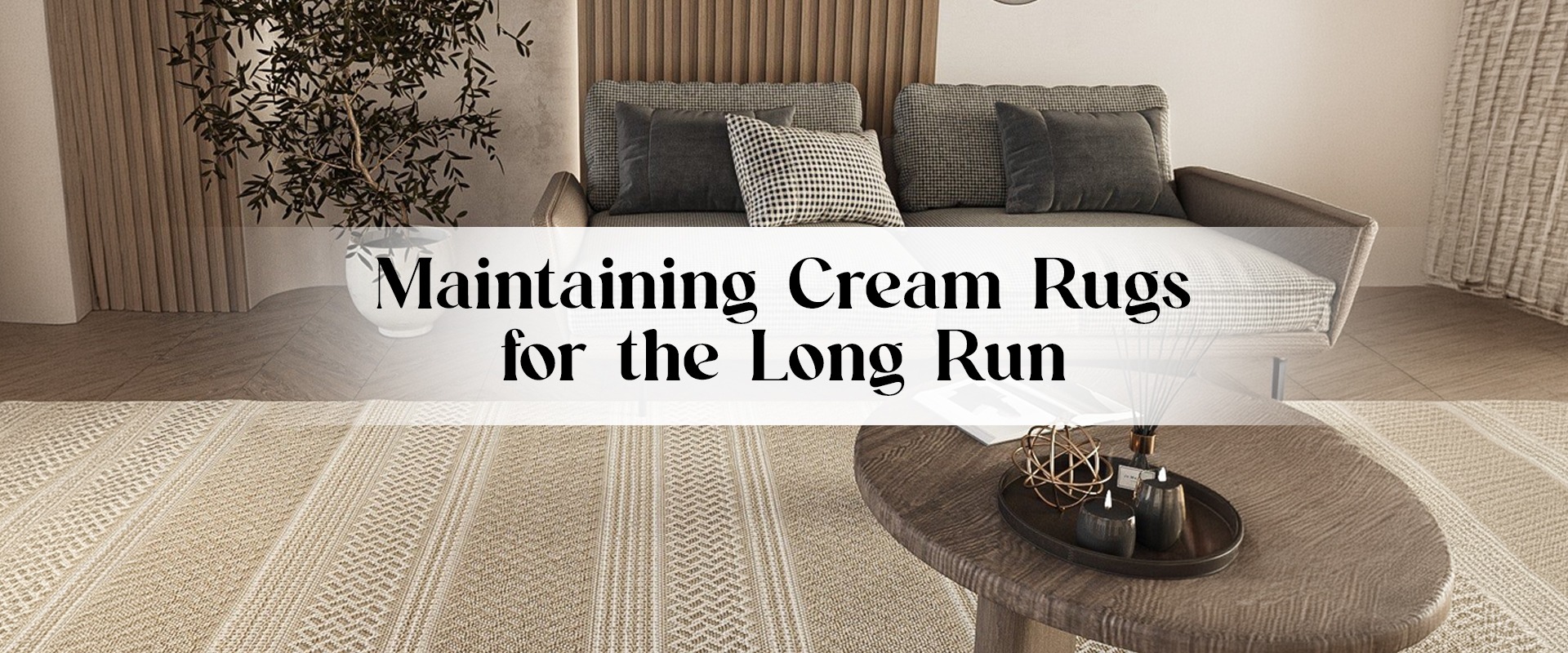
There is something quietly commanding about a cream rug. It does not shout for attention; instead, the soft, neutral, and warm tone creates a luminous foundation for the room. Everything seems bright, which makes small rooms appear larger and more open, while spacious areas feel more anchored.
Cream acts as a "warmer" neutral that avoids the sterile, clinical feel often associated with plain whites and other neutrals – creating a more welcoming, "relaxed luxury" aesthetic. At RugShop, we observe distinct consumer behaviours associated with cream rugs in Ireland.
Even though it is one of the most searched and purchased colour options for floor coverings, many people shy away from buying cream rugs, believing they are high-maintenance. Dwelling on cream Scandinavian rugs or premium handwoven wool pieces for days, they ultimately buy something darker, more densely patterned. The reason is simple: maintenance. In contrast, we largely deliver luxury cream carpets to high-end locations across Ireland, such as hotels, offices, and other places of prestige, where they typically have devoted employees or excellent housekeeping.
At its core, maintaining a cream rug, looking close to how it did in the showroom, seems like a consistently demanding commitment a busy homeowner can take on. However, with a few simple tips and tricks, it may be easier than it sounds. All it takes is a fair understanding of the importance of intentional care.
Cream and Ivory Are Not White — and That Difference Matters
One of the most common misconceptions is that cream and ivory rugs carry the same maintenance challenges as pure white rugs. In reality, they are more complex.
White is a blank slate; impurities show up as colour. Cream and ivory already carry warm undertones – subtle notes of yellow ochre, beige or blush – and their appearance is precisely what makes them deceptive to care for.
Over time, a cream carpet can begin to develop a yellowish tinge that looks like ageing or deep soiling when it is neither. Exposure to sunlight (UV oxidation is a common culprit in south-facing Irish rooms with large windows) may result in odours from the natural off-gassing of certain latex rug backings or from residues of cleaning products that were not fully rinsed out.
The rug appears dirty even when it is clean. It looks stained when the issue is chemical. Treating it with the wrong method at this stage makes the problem significantly worse. A pure white rug offers more visual honesty in this sense — the problem is obvious and the remedy is usually more straightforward. Cream and ivory demand a more discerning eye.
Pile and Weave: Why Cleaning Method Cannot Be Generic
The single most important variable in cream rug maintenance is construction. Two pieces of the same or similar colour may require entirely different cleaning approaches depending on how they were made.
- A hand-knotted Persian rug in cream colour is typically made on a wool pile with a cotton foundation. Wool is naturally soil-resistant to a degree because of its lanolin content. But it is also pH-sensitive. Alkaline cleaners—including many common household multipurpose sprays—can strip the natural oils from wool fibres. This leads to a brittle texture and accelerated yellowing. For Persian wool rugs in cream or ivory, the recommendation is a mild, pH-neutral wool wash solution applied sparingly and blotted (never rubbed) dry.
- Cream-coloured Turkish rugs bring similar considerations, but they often have denser knotting and, in some cases, silk accents or highlights. Silk does not tolerate moisture well and can watermark if wet-cleaned incorrectly. Steam cleaning, which is often the preferred domestic solution, is generally unsuitable for hand-knotted pile rugs in any fibre and can cause wool to feel or silk to distort permanently.
- Flatweave rugs, such as dhurries or natural fibre options, present a different set of considerations. Without a pile, there is nowhere for dirt to hide between the fibres. The surface is exposed. This makes soiling more immediately visible but also more readily addressable. Kilims can usually tolerate more direct cleaning and often can be taken outdoors and gently hosed down on a warm day. The reversible nature of most flatweaves also works in your favour — flipping the rug occasionally is a form of passive maintenance.
- Microfibre and polypropylene rugs are arguably the most forgiving in the cream family and represent one of the strongest low-maintenance options for households with children or pets. The ultra-fine synthetic fibres repel water and surface staining with reasonable efficiency. A damp cloth resolves most marks before they set. However, microfibre does attract pet hair and fine dust with magnetic enthusiasm, so vacuum frequency matters more here than with wool.
- Shaggy or high-pile cream rugs trap debris deep within the fibres and are the most labour-intensive to keep clean. A standard vacuum head struggles to penetrate a long pile effectively. A suction-only attachment (without the rotating brush bar, which can tangle and damage long fibres) used regularly is the better tool.
Importance of Material-Specific Cleaners: The Detail Most People Skip
Generic carpet foam and all-purpose fabric sprays are not appropriate for most rug types and are particularly problematic on cream-toned rugs, where any chemical discolouration reads clearly.
Using the wrong product on a hand-knotted wool rug, even if you mean well, can leave a tide mark or a bleached patch that no amount of subsequent cleaning will reverse.
The correct approach is product matching. Wool rugs need wool-specific enzyme-free cleaners. Cotton-backed flatweaves like kilims respond well to diluted white vinegar solutions for mild spot treatment.
Microfibre benefits from gentle synthetic fabric cleaners with no silicone additives, which can flatten the pile and attract more dust over time. Always patch-test any cleaner on a hidden corner before applying it to a visible area.
Professional Cleaning vs. DIY—What’s the Safest Way to Keep Cream-Area Rugs Prim and Proper
For most day-to-day maintenance, you can entirely manage DIY care if you use the correct tools and products. A good quality vacuum used consistently is the most effective carpet maintenance tool available and costs nothing beyond the appliance itself.
For some pieces, professional cleaning is not optional — it is the only sensible path. A hand-knotted Persian or Turkish rug that has absorbed a large spill should be assessed by a professional rug cleaner rather than subjected to domestic wet-cleaning.
The same applies to cream rugs that have developed overall yellowing or uneven tonal patches. A professional cleaner can identify whether the discolouration is from UV oxidation, soiling or chemical residue and treat it accordingly. They also have the drying infrastructure to prevent the mildew and odour problems that arise when a thick wool rug is dried too slowly in a domestic setting.
A general rule: machine-woven microfibre and modern synthetic rugs can be managed domestically. Hand-knotted or hand-tufted wool and silk rugs benefit from professional care once or twice per year.
Matching the Rug to the Room: Low-Maintenance vs. High-Maintenance Picks
Not every cream rug belongs in every room. Choosing the right construction for the right level of foot traffic is the most practical maintenance decision a homeowner can make — and it is worth getting right before browsing rugs for sale rather than after a costly mistake has been made.
- In a primary living room or family dining area — spaces that absorb significant daily movement — a flatweave cream kilim or dhurrie from Rugshop's collection is a far more pragmatic choice than a high-pile shag rug. Flatweaves are easier to clean quickly, are reversible and lack the deep pile that conceals grinding grit. They are durable enough for daily use without looking utilitarian.
- In a bedroom where foot traffic is lighter and shoes are typically removed, a deeper-pile cream rug becomes viable. A soft microfibre in cream works beautifully here — it is warm underfoot in the morning, pleasingly tactile and resistant enough to morning-routine spills.
- For hallways, the honest answer is that cream rugs need careful thought. A narrow hallway runner in cream is a daily risk unless it is a tightly woven synthetic or a treated flatweave. Rugshop's range of flatweave runners offers the aesthetic payoff of a light neutral without the high-maintenance burden.
- For a formal sitting room used less frequently, a cream Persian or Turkish rug becomes genuinely appropriate. The level of craft in a hand-knotted oriental rug means it is built to outlast decades when properly maintained — and in a lower-traffic space, that maintenance is far easier to sustain.
One often-overlooked option for awkward or non-standard spaces is custom rugs. If a room has an unusual footprint — a bay window, an open-plan kitchen-diner or a curved staircase landing — a standard size will rarely sit right.
A poorly fitted rug curls at its edges, gathers foot traffic at its perimeter and is harder to keep clean than one cut precisely to the space. Rugshop offers custom sizing, which is worth considering if you are serious about both aesthetics and long-term maintenance — because a rug that fits properly is simply easier to care for.
Shoe Marks: The Most Common Enemy of Cream Rugs
A shoe mark on a cream rug is a familiar and demoralising sight. The instinct is to scrub immediately and vigorously. Such action is almost always the wrong move.
Shoe marks deposit both surface particles and oily residue. Rubbing spreads the residue deeper into the fibre and pushes surface particles further into the pile. The correct first step is to blot the mark with a clean, dry cloth to lift as much of the surface deposit as possible before any moisture is introduced.
For wool pile rugs, including Persian and Turkish styles, a small amount of cold water with a drop of wool-safe detergent, worked gently into the mark with a soft cloth and then blotted dry, will address most shoe marks without incident.
The underlying fix for repeated shoe marks is structural rather than reactive: a quality entrance mat before the rug and a household culture of removing shoes at the door. Both are practical habits that dramatically reduce the frequency with which cleaning becomes necessary.
The Longer View
A cream rug in excellent condition is one of the most effective things in a home — light-amplifying, versatile and almost universally compatible with the neutral and warm interior palettes that remain dominant in Irish homes.
For anyone searching for cream rugs for sale in Ireland, Rugshop's collection covers the full spectrum of construction and lifestyle needs. Whether you are drawn to the tactile warmth of a hand-knotted Persian cream rug or the practical elegance of a no-fuss polypropylene pile, the best-maintained cream rug is ultimately the one chosen thoughtfully from the start.
Frequently Asked Questions About Cream Rugs
Yellowing in cream rugs is most commonly caused by UV oxidation from sunlight exposure. For UV yellowing, professional rug cleaning with an appropriate brightening treatment is usually required. Some effective DIY methods include spot cleaning with cold water, slow drying, rotating the rug every week, and avoiding direct sun exposure.
For high-traffic areas – hallways, family living rooms and dining rooms – the best cream rug option is a tightly woven flatweave in a synthetic or wool-cotton blend. Flatweave and polypropylene Scandi rugs are easier to clean than pile rugs.
In most cases, no. Generic carpet cleaning foams and spray-on fabric cleaners are formulated for wall-to-wall carpet, which typically uses synthetic pile and a synthetic backing. For cream wool rugs, a pH-neutral, wool-specific cleaner is the appropriate choice. For a cream carpet with a synthetic pile, a standard carpet cleaner may be appropriate, but always patch-test first in a hidden area. If in doubt, err toward the mildest option and consult the care label.
It’s all about selecting the right sizes and shades of floor coverings. Rugshop offers custom rug sizing, which is particularly useful for spaces with non-standard dimensions. Another element is contrast. blend the best colours, like terracotta, corals and blacks. Stick to thematic patterns for symmetry. You can also opt for our expert rug-buying guide for personal recommendations.
Professional cleaning once a year is usually the minimum for a cream wool rug that is used a lot in the home. If you have kids, pets, or a lot of foot traffic, you should have it cleaned twice a year, especially if it is a Persian or Turkish hand-knotted rug.