

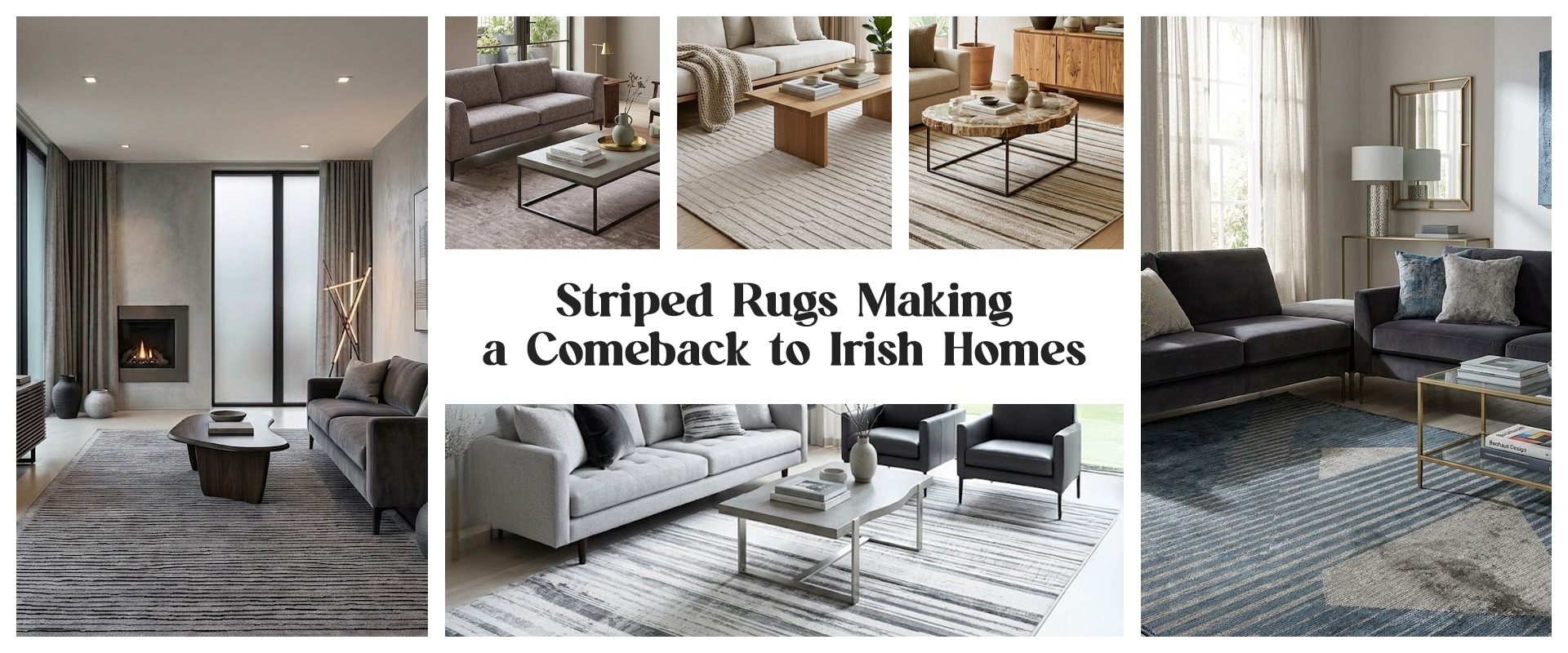
In the 1970s and early 1980s, striped rugs were hugely popular in Ireland. Loved for adding a modern, groovy touch to interiors, they were a bold, bright and striking addition. Nowadays, interest in striped rugs is growing once again, with homeowners and interior designers embracing retro-inspired designs reimagined for contemporary homes.
If you are already browsing the Rugshop online store to buy striped rugs in Ireland and are looking for inspiration to make it work for your space, here is some guidance for you, coming straight from the experts.
Maximising natural light and creating a sense of space remain top priorities for any home. Discover how eclectic vintage rug patterns can act as a clever visual tool that gently elongates narrow hallways, brightens living rooms, and introduces architectural structure without feeling cluttered. The only question is how you prefer to style it: do you lean toward quiet, calming textures, or do you enjoy making a fun, nostalgic statement? Here is a guide to helping you find the perfect match for your home.
The Scandinavian Minimalist Aesthetic
Scandinavian-inspired interiors blend minimalism with a welcoming Irish warmth. The designs are mostly subtle and delicate and perfectly match timber furniture, heavily textured bouclé sofas, and soft, puddle-length linen curtains.
To create this look, you can go for something like the Beige Cream Stripes Scandi Indoor Rug or the Black and White Striped Bedroom Rug. Focusing on subtlety, tone-on-tone cream and beige rugs or a fine-line minimalist stripe area rug brings a soft harmony to a room.
Materials like acrylic, polyester or blended wool have become a practical choice of materials to go for in modern Irish homes for easier maintenance.
Pro-Tip for Irish Homes: You might find that cream stripes on a beige or soft grey background work beautifully. Warm oatmeal and cream tones generally maximise cosiness, whereas pure white can sometimes feel a bit stark under our natural daylight.
70s Again: Would You Like to Recreate the Retro & Vintage Bold Statement?
High-contrast, deeply artistic, almost psychedelic patterns are so wonderfully nostalgic. Picture a 1970s mid-century modern aesthetic meeting the charm of a chic Dublin townhouse. Why not let the rug act as the primary artwork of the room?
Pairing a black-and-white striped rug with rich walnut wood tones, tan leather accent chairs, and structural indoor plants creates a gorgeous balance. If you enjoy nostalgia, 70s-style vintage rugs offer great character. If it suits you better, look for a plush hand-tufted striped carpet or high-pile monochrome block stripes.
Mid-century modern geometric rugs also feature bold stripes that easily anchor a room. Naturally, the classic black-and-white striped rug remains a brilliant statement piece.
Practical Sizing & Placement Guide for Irish Layouts
Traditional Irish homes often feature longer entryways. A vertical striped runner naturally draws the eye forward, helping narrow spaces feel a bit grander. Many homes have staircases near the entrance, and matching the entryway rug with the staircase rug works well for a sense of order. In case you are unable to get the perfect size, you can explore our custom-made striped stair carpets that are made-to-measure on request.
If you are looking to make over your living room, particularly open-plan spaces, a larger format helps define your seating zone away from the dining or kitchen areas. Large striped rugs made from durable synthetic fibres or wool blends are often a practical choice for busy family homes.
Explore Eclectic Stripe Rugs at Rugshop
Whether you prefer a whisper-quiet Scandi line to soothe a busy mind or a retro block stripe to inject some fun into a tired room, adding a pattern can gently refresh your interiors without the need for painting. Stripes direct the eye, stretch the space, and bring an effortless sense of design. We invite you to explore our curated collections at Rugshop.ie to find a piece that suits your home perfectly.
Frequently Asked Questions About Striped Rugs
They can work wonders for compact spaces. When you place a striped rug in a square, boxy room, the lines naturally draw the eye outward, creating a gentle illusion of length or width. To optimise the flow, we suggest running the stripes parallel to your longest wall or pointing them toward a natural light source. This simple trick encourages a feeling of movement and makes the room feel much less confined.
Striped rugs are highly versatile and adapt beautifully to several distinct aesthetics. If you enjoy a calm, organic feel, subtle, tone-on-tone pinstripes pair perfectly with Scandinavian minimalist interiors; also, similar features go well with Japandi principles. Many mid-century modern rugs incorporate bold striped motifs that help anchor a room. They even sit comfortably in traditional homes when you choose softer, faded vintage colourways that add character without overwhelming the space.
A curling, slipping hallway runner can certainly feel frustrating! Runners often warp, curve, or "banana" because daily foot traffic continually pushes the fabric in one direction over a hard floor. To keep your runner perfectly straight, safe, and flat, we highly recommend placing a high-quality anti-slip rug pad underneath. A good underlay firmly grips both the floor and the rug, stopping the sliding and preventing the corners from curling.
Stripes are considered by many interior designers a staple pattern rather than a passing fad. A good stripe, much like a classic Breton top in your wardrobe, is one that will travel well with the whims of changing taste. While some textures or neon colours might come and go, classic colour combinations such as navy and cream, charcoal and stone, or warm monochromatic lines provide a great, timeless base to enjoy for years to come.
Stripes naturally direct the eye; they serve as excellent tools for defining your room layout. In open-plan living areas, placing a large striped rug under your sofas and coffee table beautifully anchors the seating zone, visually separating it from your dining or kitchen space. In narrow layouts, such as long hallways or galley kitchens, a striped runner gently guides the path forward. We find they look most natural when you align the stripes with the main direction of your foot traffic.